

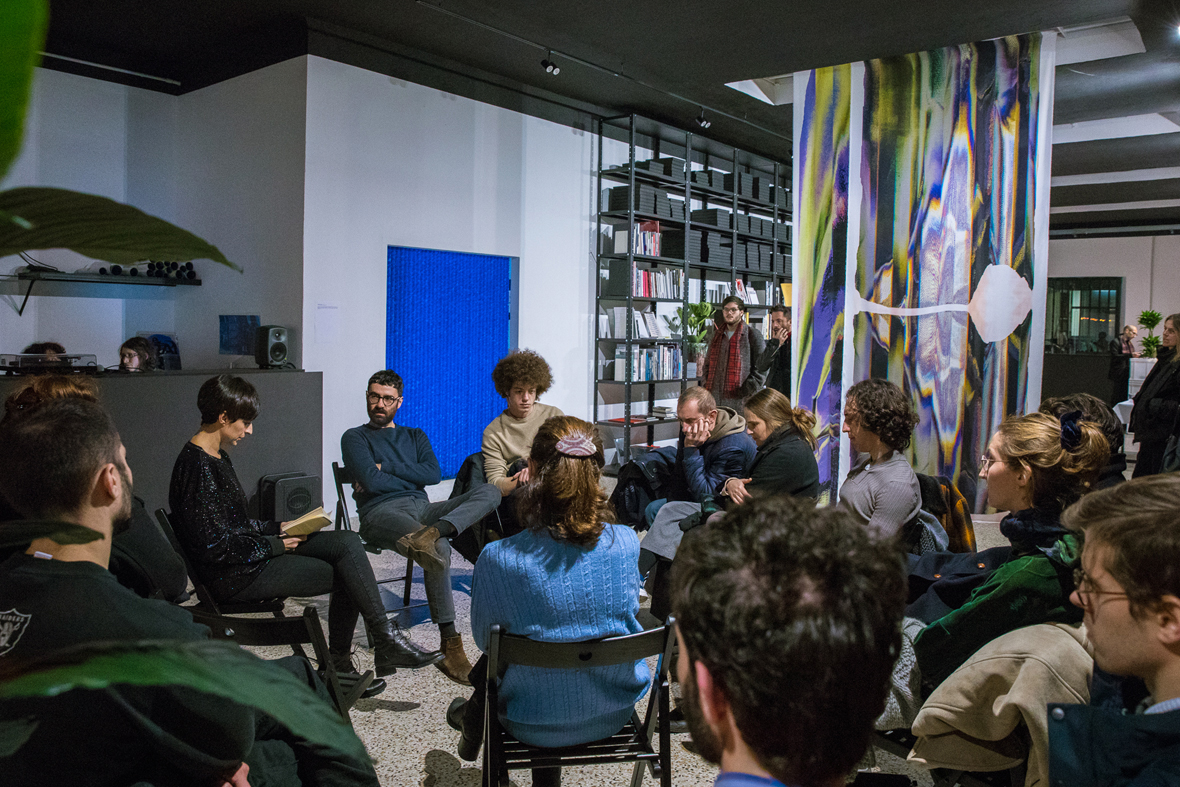




What I would like to achieve in the space in via Parma 31 primarily concerns a particular phase in the journey of a work of art: that is, when it leaves the artist’s studio and – losing its privacy – it becomes public. That’s what happens when a work is set up in a space other than the studio, and more precisely, a public space: a gallery, a museum, and so on.
During this transitional stage, a new figure takes over (or may take over), a figure one can define in several ways, such as ‘gallery manager’ (intended with a certain meaning), or ‘curator’… I would prefer to use a term borrowed from literature, that I deem more precise and appropriate, the editor – the person who picks up the work while it’s still piping hot, immerses himself in it in order to fully comprehend it, and subsequently suggests certain changes to the author, which the editor may consider necessary in order to set it up – and present it to the public – in the best possible manner. To achieve this, he must first understand it and then choose the best course of action, possibly without superimposing anything personal, and especially anything that could distort the meaning given to the work by the author himself: if ever, any changes should serve the purpose of expressing it at its best.
In recent years, I often pondered on the meaning of mounting an exhibition, in particular a group exhibition, where the challenge consists in creating a new organism formed by different parts which must each be placed in the best possible position, in order to make the whole organism – albeit temporarily – function properly, thus triggering a condition of energy and keeping it going. My experience with e/static enabled me to develop an aptitude for this particular kind of artistic practice, which seems to me especially interesting since it can be linked to the much vaster theme of the landscape: an entity which is generally placed outside the borders of the gallery-space, though it may be represented therein. The landscape is a topic which has been engrossing me for some time now, an extremely vast theme, potentially endless, due to the connections it establishes between history and nature, and which I deem pivotal among those which concern the fundamental matters pertaining to existence. As far as I’m concerned, the issue of mounting – also with relation to a theme such as the landscape – is still open, and it could well lead to the experience of killing floor. At least that is what I hope for.
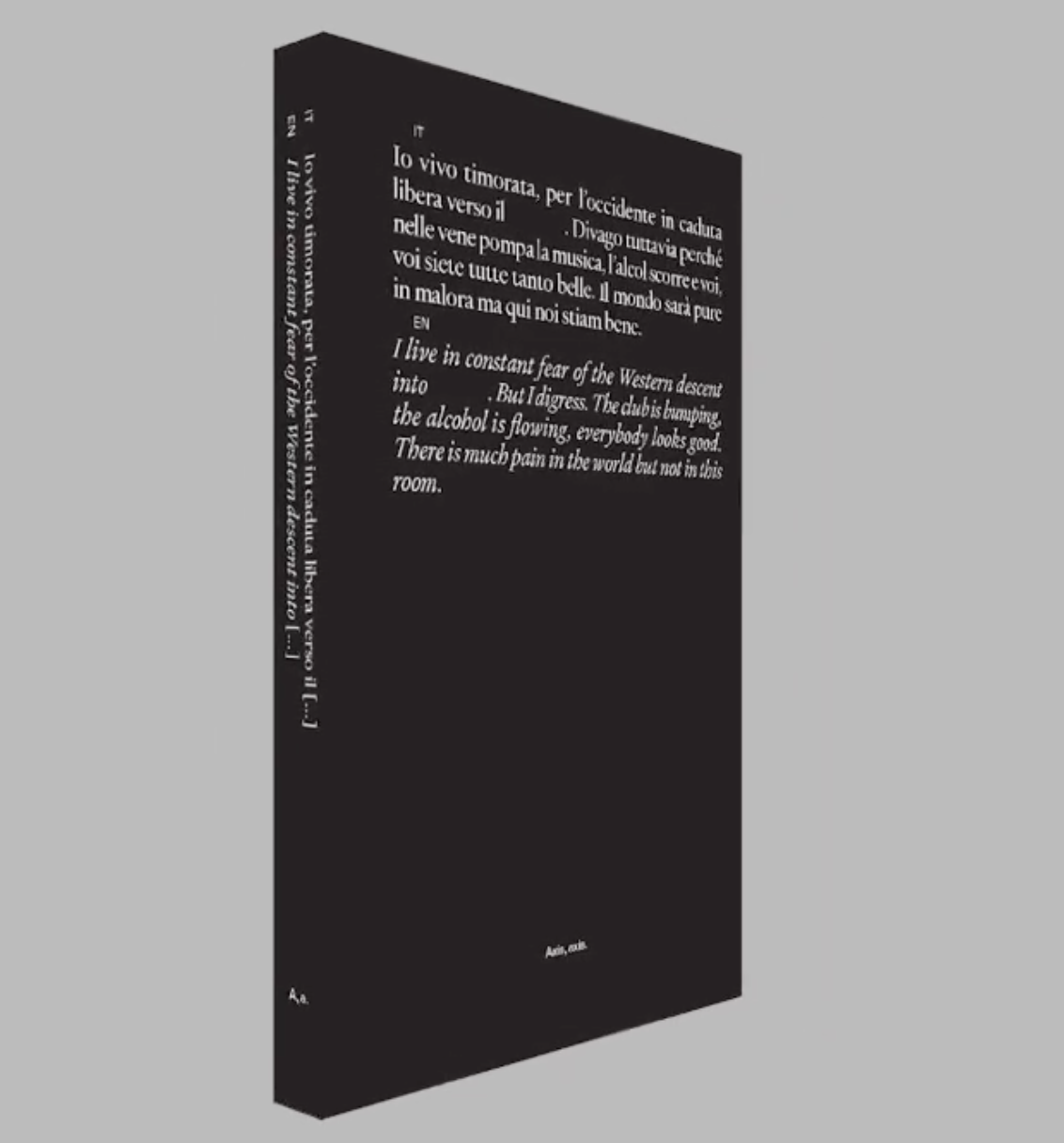
Excerpt of the text by Carlo Fossati (full version available, it/en, through Media & Link)
Project curated by Carlo Fossati
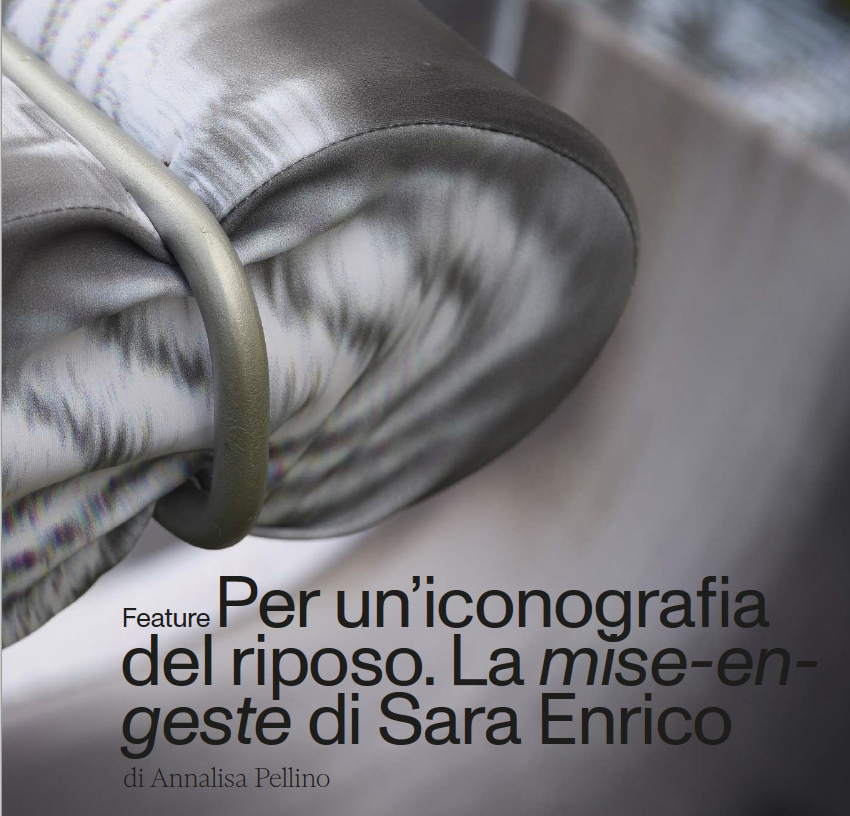
Chapter I (2012) with Andrea Caretto- Raffaella Spagna, Manuele Cerutti, Sara Enrico, Alessandro Quaranta